Bio
Woodworking - Beginnings and Myrtle Beach, 1972 - 1976
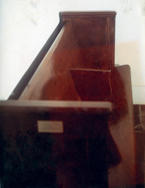
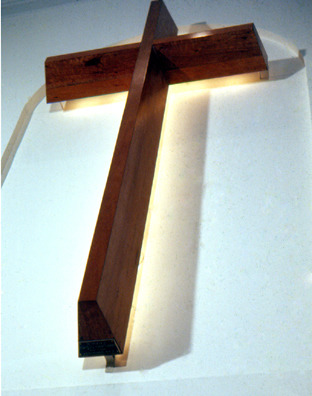
I've been making objects out of wood for over 60 years, starting with a little model airplane I built when I was 5 or so. By the time I was 12, I was building airplanes bigger than myself, boats, cars and rockets. In '60, I set about restoring an old style 24' power boat with an antique 2 cylinder engine, then progressed to a 33' that I lived aboard in New York City. Try that in the winter. In '70, in anticipation of a baby, I bought some woodworking equipment and built a cradle from plans, which she quickly outgrew, as well as designing and building the fixtures for a Meher Baba bookstore in Pasadena, CA. After the earthquake of '71, we moved to Myrtle Beach, S.C. where I had been invited to run a printing press for a startup company run by a friend whom I had met in NYC (I had learned how to run printing presses to support myself when I was studying music). The job fell through in a few months but not before I fired up another skill I had picked up along the way: guitar teaching. Within a few months, I had more students than I had ever had in either NYC or Pasadena, my most famous of which is Vanna White. By the time summer rolled around, all my students had disappeared into tourism businesses leaving me without any income. In the interim, I had been commissioned to design and build a large display cabinet for the neighboring Meher Baba Center. This project led to more commissions. Before I knew it, I was building tables for a clothing store, pews for Episcopalians, a cross for the Baptists, commercial fixtures and interiors for an interior designer, antique dealers who needed pieces to be tweaked before putting them on sale, or completely taken apart and reglued, and tons of furniture repair, refinishing, as well as designing and building custom pieces and interiors.
When the oil embargo of '74 ruined my business, I moved to the San Francisco Bay Area to be around my children and started all over.
Figurative Paintings by Michael Childs
When I went to live with my dad, Bernard Childs, in Paris in 1953, he introduced me to the method of drawing developed by Kimon Nikolaides ("The Natural Way to Draw," Houghton Mifflin Boston 1969) with whom he had studied at the Art Students' League in the '30's. There were three components to the method: the first was gesture where you capture the movement, weight and essence of an object or a pose with a continuos flowing line that never leaves the paper (or any medium), without regard to the outline. The image below, "Dancer," contains nothing but gestures of a dancing woman, overlaid with a quick contour when I asked her to freeze in the middle of her dance. All the images below started as gestures. Then I kept working on them - or not. I work spontaneously with very little planning. I have a general idea where I want to go, and I'm in a particular emotional state. Whenever I try to duplicate what I've done before, like the "Yellow Blue Seated Nude," below, it never works out. Something else happens and I follow its lead, like hanging onto a galloping horse.
Transforming the Ordinary into the Extraordinary
I combine painting and drawing in a unique and personal way. My heros are Picasso for the directness of his line, the color of Matisse and the emotion and movement of Van Gogh. My subject matter is simple: figurative, floral, vegetables, fruits, and landscapes - but they're just a means to contemplate the Matrix of life. This approach transforms the ordinary into the extraordinary.
"I want my images to be alive, as if caught in a moment of time, in the middle of a movement. I also try to capture the emotional images evoked while creating the images. To me, everything and everyone exists simultaneously on different levels. Since I usually work with models, I slip into a meditative state wherein I perceive an inner world delineated externally by color and line. I constantly shift the emphasis between the two, and constantly experiment with new mediums."
Contour Drawing - Perceptual As Opposed To Conceptual
Contour drawing is comparable to driving a Ferrari on the narrow twisting roads that traverse the Alps at high speed. It consists of drawing without looking at what you're drawing. As your eye slowly follows the outline of the subject, your hand draws or paints what you see. It's a Zen-like meditation. You have to become mindless and mindful simultaneously. It takes practice, hour after hour of practice. What happens is something magical to the quality of your line. It becomes alive and sensitive. The viewer becomes engaged with this single line that a work filled with scratches and extraneous information cannot do. Contour lines are the opposite of conceptual lines. Someone says, for instance, "I know how to draw the human body. The arms go this way, the legs this way. Here is the formula for the size of the head in relation to the body, etc." A contour artist will say, "I know how to go about drawing the human figure, but I don't know how to draw this particular one until I do it." And each time that artist draws the same figure in the same pose, it will be different, because the artist will see something new, something different, and in another moment of time.
I had a particular challenge in that I'm dyslexic. In other words, my eye jumps ahead of itself, then jumps back
This body of work started as a way to paint on 100% rag mats left over from framing and matting. I applied water and paint on the mat. Then I used an X-Acto knife to draw contour lines. The wet paint seeped into the cuts, accentuating the color, like applying stain to wood with scratches. The scratches stand out. Then, like wood, I saturated the mat with penetrating epoxy which hardened and weatherproofed the paper based mat. With a few coats of exterior varnish, the little paintings can be left outside without any protection, without any glass or framing. There are about 25 left out of an original body of work of about 70 pieces.
Gestures, from 4-1/2"x5-1/2 to 22"x30" – originals, all available as prints
Contour, from small to large – some originals, all available as prints
Gesture Images - the art of capturing the moment
It creates an aura of self-doubt, that what I see is not what others see, and that I'm deluding myself. This may be true in some, maybe all, circumstances. But the advantage of becoming older is the self confidence I never experienced in my youth.
Mostly, gestures are used as warm ups, done on newsprint and thrown away. The poses generally last no more than 2 minutes. I like them to be continuous movements or less than 10 seconds apart. I wondered if I could turn them into collectible art, so I started doing them on rag paper using a different color pen, with permanent ink, for each pose. Many of them end up in the trash. Some are keepers...
After looking at the diversity of my images, I feel I should explain how I work. I re-entered the art scene in my 50's while I was living on a boat with my two sons in Sausalito. I had no studio, so, determined to create work for sale, I used advanced figure drawing classes to both sharpen my skills, experiment with different approaches and media and produce images I thought I could sell. Advanced figure drawing classes don't have instructors. Artists attend them to hone their skills. Model fees are thus shared with the group. The format is usually shorter poses followed by longer and longer poses. One group's longest pose is 7 minutes. Some others devote several sessions to the same pose. The backgrounds suck: easels, tables, artists, etc. So I started to layer the shorter poses over each other. When one of the poses was long enough, I'd do a contour right over them, and maybe play with background colors. The work had an interesting, ambiguous quality. One piece, "Heavenly," was started in my living room and finished in Hawaii ...
Floral and Other Paintings
In 1998 I met a woman with a rose garden. Flowers don't move. They don't need breaks or charge modeling fees. They're great subjects for contour lines and color. A couple of years later, a Sausalito gallery asked me to produce small, framed images of fruits and vegetables. Some were commissioned by customers. About 30 or 40 originals sold and countless prints
Landscapes - the art of capturing the moment
I tried my hand at some plein air images